What would happen if your largest funding source disappeared tomorrow?
For too many Canadian nonprofits, that’s not a hypothetical question, it’s a real risk hiding in plain sight. When the pandemic hit, many nonprofits watched their primary sources of funding disappear overnight. Galas were cancelled, grants were delayed, and donor priorities shifted immediately. For some, it was a wake-up call. For others, a stark lesson in the importance of diversification.
Strengthening sustainability through multiple funding sources
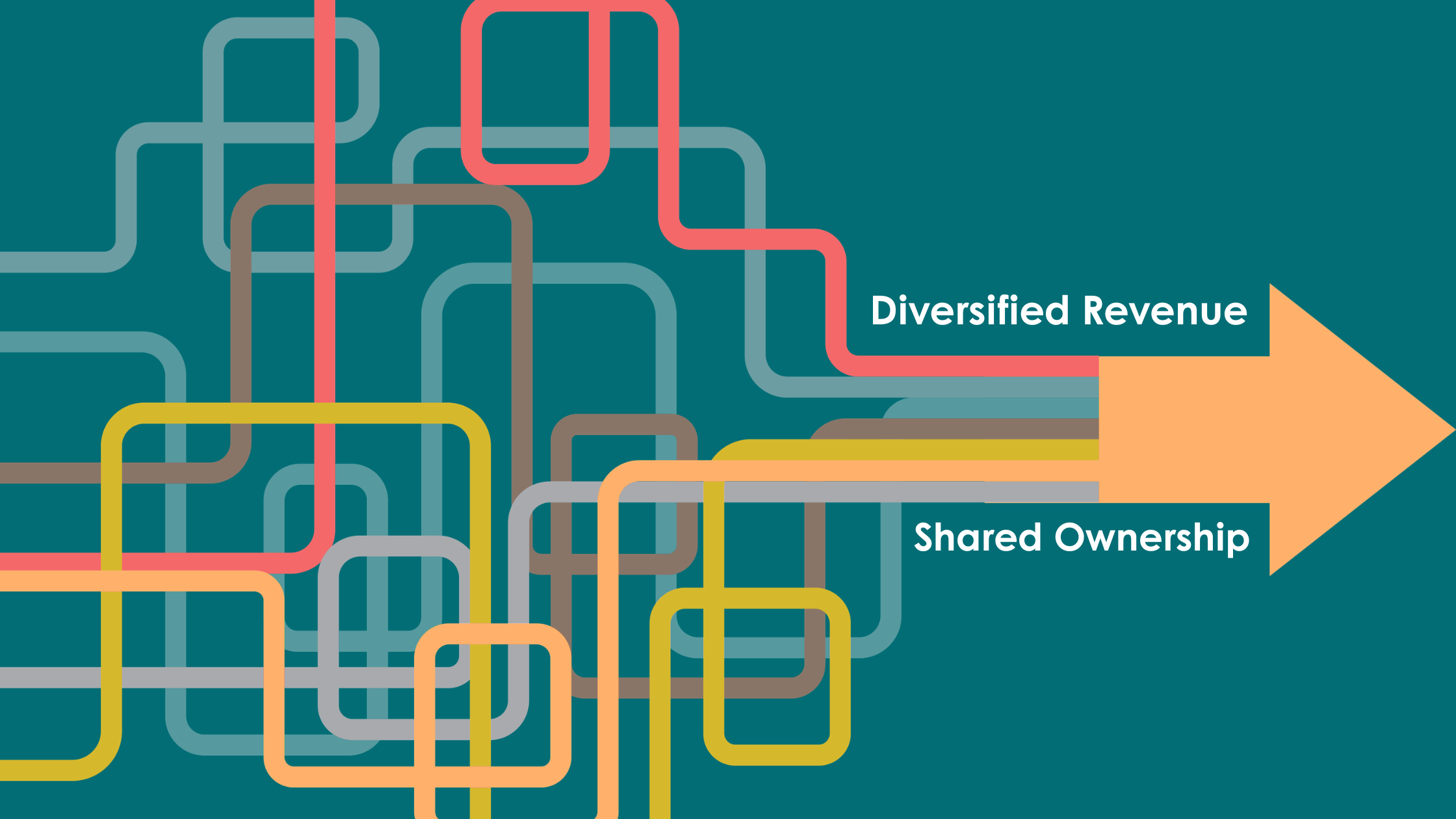
In today’s nonprofit landscape, financial resilience isn’t just about raising more money. It’s about raising smarter through a variety of revenue sources. Organizations that rely heavily on a single source of funding, whether government grants, special events, or a few major donors, are vulnerable to forces beyond their control. Revenue diversification is not simply a financial strategy; it’s a sustainability mindset.
This conversation most often arises with organizations that are heavily reliant on government funding and seeking to reduce risk through diversification. Less frequently discussed, however, are the many small- to medium-sized charities that have never accessed government funding at all, often due to limited capacity or familiarity with public funding systems. For these organizations, diversification may mean engaging government funding for the first time through service delivery or capacity-building grants. In both cases, resilience is strengthened not by avoiding any one source, but by reducing reliance on a single basket.
A well-balanced fund development portfolio spreads both risk and opportunity. When one revenue stream slows, others can help sustain operations and preserve impact. Just as investors diversify to protect assets, nonprofits must do the same to protect their mission.
Diversification can take many forms, including:
- Individual giving through annual campaigns, legacy gifts, and monthly donors
- Institutional funding from foundations, corporations, and government programs
- Earned revenue through social enterprise or fee-for-service models
The most successful organizations view diversification not as a checklist, but as a long-term progression. It starts with understanding where your organization’s strengths, relationships, and values align and then intentionally building out complementary revenue streams over time.
Internal assessment questions for Canadian nonprofit revenue diversification
In practice, diversification often begins by taking a look inward and asking internal questions about assets, operations, and untapped potential. For example:
- Can we improve our investment strategy to generate a more reliable stream of annual revenue?
- Are there elements of our service model that could responsibly generate revenue?
- Can underused space or downtime in our facilities be leveraged for rental income?
- Is there a gap in community services we are well positioned to fill?
- How might technology improve return on investment through increased revenue or cost savings?
- Can administrative or shared services be delivered more efficiently to generate revenue or reduce costs?
When organizations begin to view diversification through this lens, it often opens the door to new models of shared ownership and partnership that extend fundraising and revenue generation beyond staff alone. Diversification can even mean broadening who is engaged in fund development.
Reimagining a plateaued special event through shared ownership
In one organization, a long-running successful special event had plateaued after years of being staff-led and resource-intensive. Rather than trying to extract incremental gains from the same model, the organization reimagined the event through a community partnership lens. A corporate partner with strong employee engagement to the cause and the event was invited to take ownership of the event’s delivery, sponsorship, and peer fundraising. By shifting the event model from staff-run to a partner-led approach, the company employees leveraged corporate and personal networks that charity staff alone could not access, ultimately tripling revenue. And more fun in fundraising resulted.
When fundraising is shared, rather than contained within the organization, it becomes more scalable, resilient, and rewarding.
This type of intentional restructuring requires a clear understanding of donor behavior, organizational capacity, and where authentic partnerships can unlock growth beyond traditional staff-led models.
Diversification succeeds when organizations invite others to help carry the mission forward, creating fundraising opportunities that feel purposeful, energizing, and genuinely shared.
In an era of economic uncertainty and changing donor expectations, a diversified approach gives nonprofits more security and stability with flexibility. It allows organizations to plan with confidence, adapt to disruption, and continue delivering on their mission without over-reliance on any single source of support.
At Global Philanthropic Canada, we support organizations in charting a clear path toward diversified, sustainable fundraising, from assessments and fund development planning to training and strategic counsel.
As the saying goes, don’t put all your eggs in one basket. In fundraising, the stakes are even higher. It’s not just about the eggs, but about ensuring the nest, the foundation of your organization itself, endures. The most sustainable nonprofits aren’t just great fundraisers. They are architects of resilience intentionally building revenue streams and partnerships that protect their mission for the long term.
If your organization is ready to strengthen its fundraising foundation, we’re pleased to support you in taking that next step.
By Deborah Barton, with contributions from Debra Bond-Gorr and Dora Boylen-Pabst, Senior Consultants, Global Philanthropic Canada
Book a complimentary 30-minute consultation with Deborah today to explore tailored strategies for advancing your fundraising goals.
Global Philanthropic Canada is a national fundraising consultancy with 90+ experienced practitioners, each bringing an average of 28 years of fundraising expertise. We provide practical, accessible counsel to organizations of all sizes and missions across Canada.
We believe in respectful, inclusive collaboration and work alongside our clients to build capacity, strengthen fundraising programs, and advance mission impact.